



The launch of the Intel X38 Express chipset occurred two weeks ago amidst a lot of early hype about its potential and performance improvements over previous chipsets. The X38 chipset is finally starting to show some promise after several BIOS releases over the past two weeks on the first retail boards ASUS and Gigabyte. However, we are still not ready to declare the chipset a winner. The chipset is not a disappointment at this stage in the game, but the whole launch event fiasco and lack of choices available in the marketplace is disappointing to us.
We are busily completing an extensive testing phase on this new chipset with the ASUS, Gigabyte, abit, and Foxconn boards that we currently have in the labs. We expect retail boards shortly from MSI and Biostar with Intel and DFI following up sometime in November with their products. In the meantime, we have received an avalanche of requests centered on which board performs best out of the available products currently for sale.
We are very close to answering those questions as testing is nearing completion now. However, we did notice a central theme in the majority of the requests and it revolved around the overclocking aspects of the boards and performance comparisons to the current chipsets. We will show the comparisons against other chipsets in the full board reviews and offer in-depth overclocking results with multiple CPU and memory configurations. The quick overview we are presenting today will help set the stage for those articles by answering our maximum FSB rates attained with the Intel Q6600 and E6550.
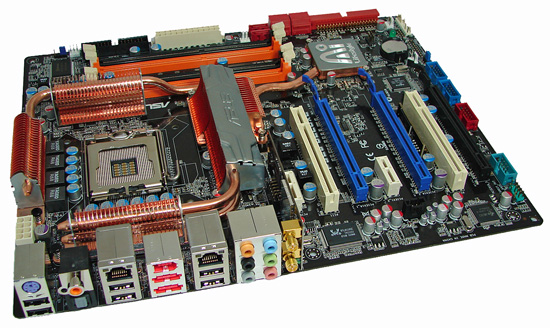
We can estimate now based upon the progress made in the past few days that the overclocking potential of the X38 chipset with current processor families should slightly exceed the P35 once it matures, much in the same way the P35 has exceeded that of the P965 over the course of the summer. At stock settings, the X38 is not any different really than the P35/680i - and for that matter the 975X chipset it replaces. This is disappointing but understandable as the X38 Express chipset is based upon the P35 core and is still saddled with an onboard memory controller.
This memory controller design from all indications has just about reached its optimum level of performance after years of refinement by Intel. In the case of the X38, it appears that additional attention and emphasis was placed on DDR3 performance at the expense of DDR2. Several of the X38 equipped DDR2 boards have been delayed as the manufacturers have tried to bring performance up to par with the P35. While being at DDR2 performance parity with the P35 in considered a success by the suppliers, it might not be for the users. However, this has been the goal from the outset as you will start to see the DDR2 X38 designs supplement and then replace the higher-end P35 products in the $150~$250 market sector.
This should not be surprising as Intel is rapidly moving forward with DDR3 as their memory of choice for enthusiast level products. The X38 is the first enthusiast product from Intel designed with this in mind. We expect to see additional performance benefits with the X38 DDR3 based offerings over other chipsets when Wolfdale and Yorkfield (Penryn) launch next month.
We originally reported in our X38 chipset overview that the X48 chipset would be making an appearance in February. That was true until today, as it now looks like the rush is on from Intel to push this updated chipset (X38 revision 2 in our book) up to a late November or early December release. The X48 is a basic drop in for the X38 chipset so board designs will not have to be changed for the most part.
The X48 will bring "official" 1600FSB and DDR3-1600 support, a few minor memory controller tweaks, and supposedly slightly better overclocking on the very high end, provided you have a capable processor. Also, expect a significant price increase that should buy you a few minor performance improvements that are only noticeable in certain benchmarks. The rush to bring this chipset to market quickly now tells us more about Intel's CPU release schedule than it does about any perceived benefits at this point.
Anyway, let's take a quick look at some initial overclocking results with boards from ASUS and Gigabyte. We had hoped to have initial results with the Foxconn and abit boards, but final BIOS releases just arrived and our efforts are concentrated on finishing the full reviews first. As a matter of fact, we just received BIOS releases from ASUS and Gigabyte to correct a few overclocking snafus we have noticed, especially with 4GB memory configurations.
We are busily completing an extensive testing phase on this new chipset with the ASUS, Gigabyte, abit, and Foxconn boards that we currently have in the labs. We expect retail boards shortly from MSI and Biostar with Intel and DFI following up sometime in November with their products. In the meantime, we have received an avalanche of requests centered on which board performs best out of the available products currently for sale.
We are very close to answering those questions as testing is nearing completion now. However, we did notice a central theme in the majority of the requests and it revolved around the overclocking aspects of the boards and performance comparisons to the current chipsets. We will show the comparisons against other chipsets in the full board reviews and offer in-depth overclocking results with multiple CPU and memory configurations. The quick overview we are presenting today will help set the stage for those articles by answering our maximum FSB rates attained with the Intel Q6600 and E6550.
We can estimate now based upon the progress made in the past few days that the overclocking potential of the X38 chipset with current processor families should slightly exceed the P35 once it matures, much in the same way the P35 has exceeded that of the P965 over the course of the summer. At stock settings, the X38 is not any different really than the P35/680i - and for that matter the 975X chipset it replaces. This is disappointing but understandable as the X38 Express chipset is based upon the P35 core and is still saddled with an onboard memory controller.
This memory controller design from all indications has just about reached its optimum level of performance after years of refinement by Intel. In the case of the X38, it appears that additional attention and emphasis was placed on DDR3 performance at the expense of DDR2. Several of the X38 equipped DDR2 boards have been delayed as the manufacturers have tried to bring performance up to par with the P35. While being at DDR2 performance parity with the P35 in considered a success by the suppliers, it might not be for the users. However, this has been the goal from the outset as you will start to see the DDR2 X38 designs supplement and then replace the higher-end P35 products in the $150~$250 market sector.
This should not be surprising as Intel is rapidly moving forward with DDR3 as their memory of choice for enthusiast level products. The X38 is the first enthusiast product from Intel designed with this in mind. We expect to see additional performance benefits with the X38 DDR3 based offerings over other chipsets when Wolfdale and Yorkfield (Penryn) launch next month.
We originally reported in our X38 chipset overview that the X48 chipset would be making an appearance in February. That was true until today, as it now looks like the rush is on from Intel to push this updated chipset (X38 revision 2 in our book) up to a late November or early December release. The X48 is a basic drop in for the X38 chipset so board designs will not have to be changed for the most part.
The X48 will bring "official" 1600FSB and DDR3-1600 support, a few minor memory controller tweaks, and supposedly slightly better overclocking on the very high end, provided you have a capable processor. Also, expect a significant price increase that should buy you a few minor performance improvements that are only noticeable in certain benchmarks. The rush to bring this chipset to market quickly now tells us more about Intel's CPU release schedule than it does about any perceived benefits at this point.
Anyway, let's take a quick look at some initial overclocking results with boards from ASUS and Gigabyte. We had hoped to have initial results with the Foxconn and abit boards, but final BIOS releases just arrived and our efforts are concentrated on finishing the full reviews first. As a matter of fact, we just received BIOS releases from ASUS and Gigabyte to correct a few overclocking snafus we have noticed, especially with 4GB memory configurations.


 Facebook
 Twitter
 RSS
RSS


8 Comments
View All Comments
457R4LDR34DKN07 - Thursday, November 1, 2007 - link
Are you ever going to update and add my mobo the Maximus Formula SE? I have been have stability issues with patriot memory at standard clocks and was hoping your update would provide some insight.werver - Thursday, October 25, 2007 - link
In the article about overclocking the X38 the author wrote "The DDR2 based Gigabyte board reached an impressive 8x485.When I look at the first image I see an overclock of 6x485 = 2910 MHz (+22%)and a memory speed of 2 x 485 x 1.2 (divider) = 1164 MHz.
Do I miss something???
kalrith - Monday, October 29, 2007 - link
I was just about to post that. Actually the first two pictures on the last page are incorrect. Both pictures show the same screenshots from EVEREST, and those two screenshots show incosistent information with the first showing 485x6 and the second showing 485x8. The MemSet screenshot for 4GB of memory shows the memory running at 485 1:1.Teknojnky - Wednesday, October 24, 2007 - link
I have a x38-DQ6, q6600 g0, wd raptor 150 & hitachi 1tb, windows xp X64 and have been getting random blue screen/reboots whenever I enable AHCI mode.(yes f6 drivers properly installed etc)
Has anandtech had any problems with ahci on these boards? (xp x64)
Demon69 - Wednesday, October 24, 2007 - link
You may need to install new drivers before you change mode in bios.From http://en.wikipedia.org/wiki/Advanced_Host_Control...">http://en.wikipedia.org/wiki/Advanced_Host_Control...
Teknojnky - Wednesday, October 24, 2007 - link
the drivers are properly installed, windows was installed with the drivers @ F6 mode.its not a boot up problem, it runs fine then at random times will blue screen/reboot (overclocked, not overclocked, even underclocked does the same).
Odeen - Wednesday, October 24, 2007 - link
I think you guys meant "saddled." The chipset is burdened by the fact that it has an onboard memory controller, it's not in the back room of a strip club getting a lap dance from the memory controller :)Michael91ah - Wednesday, October 24, 2007 - link
Thanks for the update can't wait for the comparisons.