
Motherboards Memory Storage Cases/Cooling/PSUs IT Computing Displays Mobile Mac CPUs & Chipsets Video Digital Cameras Linux Gadgets Systems Trade Shows Guides Home Increase Font Size Decrease Font Size Change Page Size
Radeon 5800 Series: Prices Up, Supplies Down
Date: November 5th, 2009
Author: Ryan Smith
Buy the JacobsParts 5870 JacobsParts Compaq
Blank
 Buy.com $21.95


It’s not often we write about prices going up.

Last week there was a rumor going around that AMD intended to raise prices on the 5800 series. At the time we wrote this off as yet another highly-speculative rumor based on shaky evidence. Official price hikes are virtually unprecedented, after all.

Then things changed.

We’ve talked previously about TSMC – the foundry both NVIDIA and AMD GPUs are manufactured at – having yield issues with their 40nm process. This first surfaced with the Radeon 4770, which at the time of its introduction was being built while TSMC’s yields were below 40%, and this coupled with its popularity made for a significant shortage around its introduction. TSMC continued to improve their yields, and by the time of the Radeon 5000 series launch, AMD told us that they weren’t concerned with yields. As of this summer, TSMC was reporting yields of 60%.

On Friday the 30th, Digitimes broke the word that TSMC’s yields were back down to 40%. This we believe is due to issues TSMC is having ramping up overall 40nm production, but regardless of the reason it represents a 33% drop in usable chips per 40nm wafer. When you’re AMD and you’re rolling out a top-to-bottom 40nm product line in a 6 month period, this is a problem.
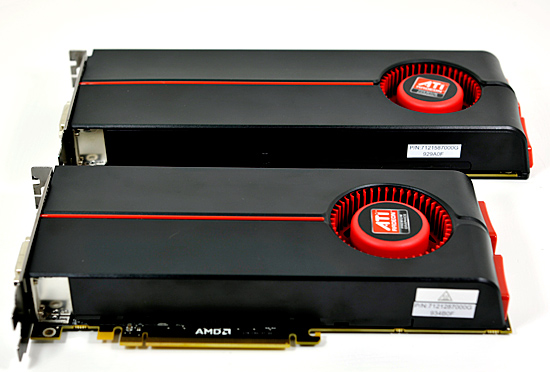

The 5870 and 5850: Out Of Stock Everywhere

When the 5800 series launched, we knew supplies would initially be tight, but we had been expecting them to pick up. With these yield problems, that has not happened. Instead 5800 cards continue to be out of stock near-universally, even with the fact that most OEMs have yet to start using these cards. AMD’s current 5800 supplies are being exhausted just by Dell and self-builders.

Meanwhile NVIDIA started the end-of-life process for the GTX 200 series some time ago, with production of the GT200 GPU ramping down. So NVIDIA doesn’t need to play pricing games with AMD, as they’ve already planned on selling out anyhow.

With low supplies, no (single-GPU) performance competition, and no price competition, you have the perfect storm for a price hike.

All of a sudden that rumor about an AMD price hike became far more realistic. Checking around, virtually none of the 5800 series cards are listed at their MSRP. Although they’ve continued to be in low supply since launch, it’s only recently that there’s been a breakaway from the $379 and $259 MSRP of the 5870 and 5850 respectively.

After our latest round of price checks, we talked with AMD about the situation and asked them if there was any truth to the rumor of an official price hike. The news is not good: 5850 prices are officially going up. AMD is citing supply issues of components (including memory) amidst the heavy demand for the 5850, and ultimately deciding to pass the cost on to the consumer. Meanwhile there is no official price hike for the 5870, although it’s going to be affected by any increased component costs just as much as the 5850.

  ATI Radeon HD 5870 ATI Radeon HD 5850 NVIDIA GeForce GTX 295 NVIDIA GeForce GTX 285
Original MSRP $379 $259 x x
AMD Estimated MSRP $379 $279 x x
Our Estimated Prices $400 $300 $450 $350

Bear in mind that the 5850 is also a special case. AMD can’t keep the 5870 in stock, never mind the 5850. For every fully-functional Cypress die they get, the only reasonable option is to build a 5870 out of it. The only things that should be going in to the 5850 are dice with a defective functional unit, making them ineligible for use in a 5870. Without an idea of how many harvestable dice TSMC is spitting out, we can’t get any real numbers, but the most reasonable assumption is that most of them are either fully-functional or unsalvageable, so we expect AMD and their vendors to be producing many more 5870s than they will 5850s. In other words, the 5850 shortage is going to be worse than the 5870 shortage.

The result of all of this is, is that regardless of the reason, there’s a price hike across the entire 5800 series – an official hike for the 5850, and an unofficial hike for the 5870. AMD has not established a new MSRP for the 5850, but their best guess is $20; ultimately it’s up to vendors (and retailers) to determine pricing. It’s hard to get an idea of what the price is going to be on a card that’s always out of stock, but an MSRP of $279 is probably too low. $300 (or more) is a more realistic target for the 5850. As for the 5870, it seems to be settling around $400.

Our best guess is that these new prices will continue through the rest of the year, even if supplies pick up as TSMC gets their yields back in order. Without any serious competition from NVIDIA, these cards can be priced anywhere between $300 and $500 based on performance alone, and no one has any incentive to keep prices down so long as 5800 series cards keep flying off of the shelves. It’s Economics 101 in action.

We can’t say we’re happy with any of this, but we can’t accuse AMD and their vendors of acting irrationally here. It’s a lousy situation for consumers, but that’s a shortage for you. When has there ever been a good shortage?

Finally, with these price hikes, our product recommendations are changing some. The 5870 is still the card to get if money is no object, but the 5850 is far more situational since it’s no longer the great bargain it once was. We can get 1GB 4890s for $170 right now, which have become downright cheap compared to our projected $300 for a 5850. Certainly the 5850 whips the 4890 by upwards of 40%, not to mention DX11 and Eyefinity, but at that level it’s commanding a 75% price premium. It’s a $300 card and performs accordingly, but don’t break the bank in order to get a 5850 at these prices.

If you want a cheap 5800 series card, then it looks like you’re out of luck until 2010.
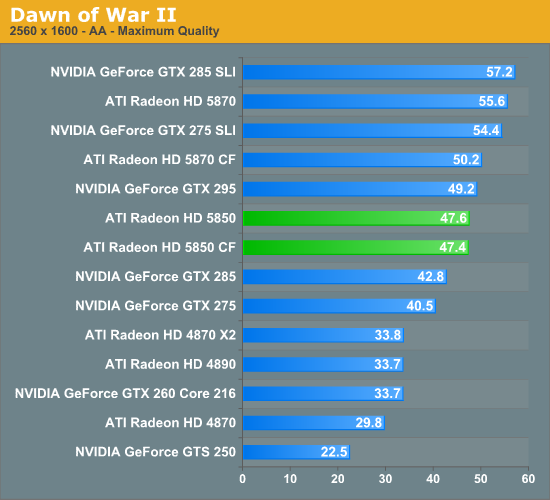

The Biggest 5850/4890 Performance Gap


99 Comments
Username:
Password:
Just be patient by The0ne, 15 days ago
As I've said when you guys reviewed the 5870 a while back...I'm going to wait until the hikes die down :D Just keep watching Hot Deals just in case.

Reply
jordan shoes$32,Ugg boots$50,handbag(lv,gucci,coach)$35,jean$30,free shipping by elivebuypp, 4 days ago
http://www.elivebuy.com

Air jordan(1-24)shoes $33

UGG BOOT $50

Nike shox(R4,NZ,OZ,TL1,TL2,TL3) $35
Handbags(Coach lv fendi d&g) $35
Tshirts (Polo ,ed hardy,lacoste) $16

Jean(True Religion,ed hardy,coogi) $30
Sunglasses(Oakey,coach,gucci,Armaini) $16
New era cap $15

Bikini (Ed hardy,polo) $25

FREE sHIPPING
http://www.elivebuy.com

Reply
die dies dice? by James5mith, 15 days ago
Just curious as I've always wondered about it.

When you are talking about the die for a GPU/CPU, is the correct plural dies or dice?

Dice seems so weird, since I associate it with gaming dice (d4,d6,d8,d10,d12,d20,etc.) But then again, the gaming items singular noun is die, and the plural is dice.

Reply
RE: die dies dice? by gwolfman, 15 days ago
I vote for dies.

Reply
RE: die dies dice? by asgallant, 15 days ago
The plural of die (the thing you roll) is dice. The plural of die (a block of semiconductor material) is dies.

Reply
RE: die dies dice? by yacoub, 14 days ago
This is correct, although even Anand and company frequently get it wrong and will argue for "dice".

Reply
RE: die dies dice? by Griswold, 14 days ago
Wrong. But i'll back it up with a book.

http://tinyurl.com/yao5fja


Reply
RE: die dies dice? by MadMan007, 7 days ago
Hmm some random book verus a dictionary, I wonder which is correct.

Reply
RE: die dies dice? by johnsonx, 11 days ago
This has been debated time and again on Anandtech, and I'm sure many other places as well. Years ago, Anand decided on 'dice'. I remain very sure that 'dice' is incorrect, but this is Anandtech, not Johnsonxtech.

For example, when coins are made a coin blank is stamped between two dies, one for the obverse design and another for the reverse design. These dies are never called 'dice', always dies. The same is true for any manufacturing or machining application of such dies - no one ever calls them 'dice'. No, I am not directly in that industry, but I have several clients that do casting and machining (mold making), and I've never once heard them talk about 'dice', only 'dies'.

'Dice' is correctly used when referring to a group of gaming dies together as a single unit. Multiple individuals separate from each other are still 'dies'.


Reply
RE: die dies dice? by CatchNathan, 11 days ago
When referring to silicone wafer, die, dice and dies are all valid, interchangeable terminology.

Die can mean one or more than one, but dice and dies always implies more than one.

I prefer dies, because it avoids confusion. Dice can also mean the action performed when you cut a wafer into multiple die(s).

Reply
5900 Series by Ratinator, 15 days ago
Hmmm.....this almost seems like the equivalent of a gas pump increase a few days before a long weekend. Isn't AMD almost ready to introduce the 5900 series.....maybe a little bit of profiteering before they have to lower the prices to make the 5900 series somewhat affordable.

Reply
RE: 5900 Series by JPForums, 14 days ago
(quote)maybe a little bit of profiteering before they have to lower the prices to make the 5900 series somewhat affordable.(/quote)

Perhaps, but it's hard to say that just yet. I tend to look at it as a rather intelligent method to lower demand to levels that they can keep up with at the moment. I'm not saying that the increased revenue wasn't a compelling motivator to support this hike, but before chalking it up to pure profiteering lets consider a few things.

Original MSRP => AMD Estimated MSRP
HD 5870 $379 => $379
HD 5850 $259 => $279

AMD didn't raise the price of the 5870. AMD raised the price of the 5850 by an amount that they think should only raise the cost of manufacturing by $20. Given that nothing about the manufacturing process changes, I think we can safely assume that the raised the price of the chip by about $20. Any further raises in price are done by board manufacturers and distributors.

Ryan Smith's Estimated Prices
(Arranged by performance descending)
GTX 295 $450
HD 5870 $400
HD 5850 $300
GTX 285 $350

If you assume Ryan and any colleagues that helped him come up with the estimated prices are correct, then you still end up in a price competitive situation. The GTX 295 is the top performer commanding $450, but the HD 5870 sits more or less in the correct price bracket given its performance. The HD 5850 sits at $300 after the price hike. However, the less powerful GTX 285 is still going for $350. If AMD used nVidia's pricing scheme, then the HD 5850 should go for a price closer to $370 and the HD 5870 should go for even more.

If AMD doesn't lower the price back down once supply exceeds demand, you could say that they are profiteering to some extend. We'll find out when the time comes.

Even if you take this as a guarantee, let's put this into perspective. When the GTX 260 came out, it's launch price was $400. Just like the HD 5850, it was a step down from the top of the line single GPU card, that beat the previous generation top of the line card. Yet it was priced the same as Ryan's estimated price hike of today's top of the line single GPU card. The GTX 280's launch price was $650.

For a more current example, nVidia is phasing out their GTX series cards. AMD is phasing out most of the ATi HD 4000 series. AMD is pricing them such that the best value in their lineup is probably the 4870/4890 (from a performance perspective). nVidia is keeping the GTX series prices the same as they were before the 5800 series launch, despite the fact that they are clearly dominated at these prices. They were smart about it, though, as they artificially limited supply to undercut demand at these prices. I'd say charging $50 more than the competition (post-price hike) for a card that underperforms compared to the competition is a little more deserving of the profiteering title.

On the same token, if prices don't come back down once supply solidifies, I still won't recommend them. Their are plenty of "lower-end" options like the HD 4870/4890 that can be crossfired for less money and deliver greater performance. The GTS 250 and lower end cards from nVidia (particularly the GTS 250) still hold good value for anyone with 1680x1050 resolution displays and smaller.

Reply
RE: 5900 Series by rudy, 14 days ago
Even if it is only to increase revenue what is wrong with that? AMD is in serious financial trouble if they expect to survive they need to make some money and while they have a hot product they should do it. If the price is high might as well have some of the money rather then allowing retailers to take most of the profit.

Reply
5900 is still bad by arnavvdesai, 15 days ago
I dont believe AMD can even afford to introduce 5900 as they would need two dies for every one of the cards. They have no incentive to do so since atm I believe there is a large enough demand from either games or 'normal' folk.

Reply
Bad market positioning by Ananke, 15 days ago
Initial MSRPs were so-so OK, but any price hike will erase AMD's advantage of being first to the market. What happens is people will just buy SONY PS3 this hollidays for entertainment, and wait unitil Nvidia and Intel come with new graphics. Which means, no games and applications for the new RAdeons, i.e. no broad customer base. After Christmass the Radeon pricing would not matter anyway, Nvidia will be almost on the market.

These should be $250 for 5850 and around $320 for 5870 to flood the market. Anything hire than this competes with other consumer electronics and particularly with game consoles, which unfortunately for AMD, have the higher hand today.

Anyway, brilliant product, bad marketing execution....

Reply
RE: Bad market positioning by mjcutri, 15 days ago
"These should be $250 for 5850 and around $320 for 5870 to flood the market."

Did you even READ the article? They aren't getting enough dies as it is, so lower prices would do nothing but cost them money. You obviously have no knowledge of basic economics. If they had enough supply, then yes, lower prices would help them sell more; but it isn't prices driving how many they sell, it is supply of their dies; therefore they can raise prices without any effect on their sales because they are already selling as many as they can make.

Reply
RE: Bad market positioning by Ananke, 15 days ago
I read the article of course. Also, I work at a major AMD distributor. This pricing will cost them market share gains...which is sad, because the product is good. They have 4-5 months ahead of Nvidia, and bad pricing will erase their advance.

My comments are from marketing /sales/ view point, based on sales statistics.

Reply
RE: Bad market positioning by PrinceGaz, 15 days ago
No this will not cost them market share gains because they cannot produce enough cards to satisfy demand, even at the higher price.

They could price the 5850's at $10 each and their market-share would remain exactly the same because they can't produce any more to sell. When they can produce enough to more than satisfy demand, then and only then should the price come down.

Reply
RE: Bad market positioning by Ananke, 15 days ago
My point is that ATI demand is more elastic to pricing than Nvidia, i.e. distributors are not selling ATI, because the final clients don't want ATI unless the price point is good to penetrate the market.

So, AMD had good chance to position themselves in the professional market, but now it seems that opportunity diminishes. I am not saying they are doing this intentionally, but their pricing/application/support mix now is above the point to make sense selling them in the distribution channel. They could have made good share increase in the discrete graphics retail market, but they need availability and better pricing. And, they compete with gaming consoles in the consumer retail area - tough battle against PS3 at $299.

I understand it is an outside AMD reason /TSMC/, but this affects AMD sales. Now, people will just completely decide to wait for Nvidia, instead giving ATI a try.

My point is - it could have been better for their market share if they had the volume availability. I am talking about lost good opportunity. They will keep their market share, but they have less chance to increase it.

Reply
RE: Bad market positioning by SlyNine, 15 days ago
OMG dude, you need availability before you can have great pricing. You're talking about a different situation , which will not change this one.

Changing the topic will not change the fact that AMD at this point in time cannot create more market penetration because of availability, so to improve profit margins ( what any good company does) they will have to raise prices, since they will sell out anyways.

I figured this might happen, it happened with the 8800GT. So I got mine early.

Reply
RE: Bad market positioning by erple2, 15 days ago
I think that the current market is telling us that any Distributor can sell as many boards as they can make, somewhat independently of the price they're asking. Demand is just crazy high right now, and supply is crazy low. Things will start happening soon, however, as supply starts to catch up, and there are alternatives available to distributors (aka NVidia has a competing product). Then AMD is going to have to seriously consider dropping the price they charge distributors for the dies.

I also understand that distributors have a lag time between when they receive a die from manufacturing to when they can turn around and sell those to retailers/end users. If that time is too long, then when the prices do finally come down, distributors will be sitting on "expensive" dies that they paid for months ago that are now selling for less. Is that what you're talking about?

If AMD is not able to quickly change the price points that board vendors purchase their products for, and the lag time (inventory) of distributors has a long shelf life, then yes, you're right. When supply does eventually catch up with demand, they will be forced to start lowering prices.

Until NVidia is capable of releasing a competing product, and since demand exceeds supply, however, AMD can more or less set whatever they want. While Distributors get squeezed a bit, if they're selling every board they make, there's not much of an issue. That's the market we're in today.

If it takes 6 months for Distributors to re-negotiate the die pricing they get from AMD, then AMD will have issues selling to Distributors.

In the short term, however, it's win-win for AMD and Distributors.

Reply
RE: Bad market positioning by SlyNine, 15 days ago
Since AMD and Nvidia both use TSMC, and since AMD has a less complicated die. I don't see how its a problem. ATI will be one step ahead the whole time.

If TSMC really is having trouble with their yields on AMDs die, Nvidia is going to struggle even more with theirs. AMD also has a possible future of using global foundries(SP?) Nvidia will be forced to use TSMC.

Reply
RE: Bad market positioning by Ananke, 15 days ago
They make double the profit margin than the previous Radeons, and they can completely absorb the price fluctuations until production ramps up. Btw, how come the lower end chips 5700 have enough volume, and the higher end don't. :) AMD is just being greedy, similarly to the AthlonX2 introduction 5 years ago. They have the experience with this technique already. It creates negative perception though - major problem for establishing brand loyalty.

Reply
RE: Bad market positioning by JPForums, 14 days ago
(Quote)They make double the profit margin than the previous Radeons, and they can completely absorb the price.(/Quote)
(Quotes aren't working)

I tend to believe that the initial higher prices are the result of having a larger die, using a less mature process, and TSMCs apparent back step in yields. Larger die sizes are something that can only change with a new process. Though, TSMC's 40nm is older than their 55nm was when they launched the ATi HD 4800 series, it seems that it still hasn't reached adequate yields. Further, TSMC seems to have gotten worse rather than better. If AMD priced the chips with the assumption that yields would be 60% then their cost would go up considerably it they only managed a 40% yield. Chances are, AMD IS absorbing some of the cost with the anticipation that TSMC will resolve the issue sooner rather than later.

(Quote)AMD is just being greedy(/Quote)

The job of corporations is to make money. Being greedy is a given. However, the perception of greed is relative to their competition. All in all, I'd say nVidia and Intel appear more greedy than AMD. Just compare the launch price of the current undisputed single GPU champ (HD 5870) to the GTX280 when it launched. How about the HD 5850 vs the GTX260. Intel manages to stay close in price in the areas in which AMD is competitive. However, I have a hard time understanding how the Core i7-975 or even the i7-950 justify their price premium over the i7-920.

Will AMD follow the same pattern when they have the overwhelming advantage? They are currently on top with no real competition in the GPU space, and haven't yet come anywhere close. However, given enough time on top, I'd say yes. Lately, though, they haven't even kept up with the cost of doing business, so I tend to think their prices are artificially low to maintain market share. I hope it pays off in the long run as I like how prices have gone with good competition.

Reply
RE: Bad market positioning by JPForums, 14 days ago
While nVidia has a much larger die thus lower yields due to both defects and unused wafer space, they will also be hitting the process much later. ATi has now used TSMC's 40nm process for 2 generations of chips (HD 4770 and the entire HD 5000 series). By the time Fermi launches, TSMC will have had several (5?) months more time to resolve the yield issues and the process will be much more mature. This should keep the costs much lower per area for nVidia compared to the costs AMD is seeing at the moment.

Of course it is up to nVidia whether to pocket the savings or pass it along to the customers. The bad news for nVidia is that, if the process matures the way it should, there won't be much of a drop in the cost of manufacturing the chips over the life of the chip.

Reply
RE: Bad market positioning by SlyNine, 14 days ago
AMD is currently making money off of the die. So even with the yields AMD is gaining ground.

Nvidia is selling a different, more complexe chip. The issues now will delay their GPU even longer. So even if it effects Nvidia slightly less the problems still transfer to Nvidia. Nvidia's chip is also a different die so they are currently facing the same problems ATI is, and some of their own.

Reply
RE: Bad market positioning by JPForums, 14 days ago
While nVidia has a much larger die thus lower yields due to both defects and unused wafer space, they will also be hitting the process much later. ATi has now used TSMC's 40nm process for 2 generations of chips (HD 4770 and the entire HD 5000 series). By the time Fermi launches, TSMC will have had several (five?) months more time to resolve the yield issues and the process will be much more mature. This should keep the costs much lower per area for nVidia compared to the costs AMD is seeing at the moment.

Of course it is up to nVidia whether to pocket the savings or pass it along to the customers. The bad news for nVidia is that, if the process matures the way it should, there won't be much of a drop in the cost of manufacturing the chips over the life of the chip.

Reply
RE: Bad market positioning by The0ne, 15 days ago
PrinzGaz is right, they just can't make enough for the demand, plain and simple.

Reply
RE: Bad market positioning by Live, 15 days ago
Ananke as you can read in the article (I know reading is hard :) they can't get enough cards to flood the market. That is the problem. They are selling every card they can get from the factory i.e. TSMC. Your plan, great as it might be, can only be done when you can produce lots of cards.

Reply
Global Foundries by cowzzwoc, 15 days ago
It will be nice when TSMC has some competition from Global Foundries. They would be feeling even more pressure than they already are

Reply
RE: Global Foundries by phaxmohdem, 14 days ago
Agreed. I wonder what the price (die size) and heat characteristics of the 5800 series would be if they were produced on GloFo's mature 45nm process compared to TSMC's seemingly troubled 40nm node.

Reply
bad news... by marc1000, 15 days ago
but this just makes the 5750 more attractive. it has 50% less performance, but costs EVEN LESS than 50% of a 5850.

that has just defined wich will be my new board: the 5750 (I'm replacing a 3850).

An I better buy it before it goes out of stock too...

Reply
What about the 5770? by JimmiG, 15 days ago
Is the 5770 also a harvested 5870? How will TSMC's problems affect the pricing and availability of the 5770? It still has competition in the sub-$200 segment in the form of any remaining GTX260 cards, and ironically, pretty much all of AMD's previous 4800 line up...

I'm definitely waiting until next year before getting a DX11 card now. The 58x0's and the 5770 were more expensive than they should have been even when they launched (the 5770 should have been less than $149, the 5850 should have been $199 and the 5870 $299, just like the 4000-series Radeon cards at launch). Once the yield problems are sorted out and Nvidia and/or Intel introduce some competition, prices will drop. Early adopters (including the very early ones before the latest price hike) will regret their purchases.

Reply
RE: What about the 5770? by Zingam, 15 days ago
No, I think they are different chips.

Reply
RE: What about the 5770? by dragonsqrrl, 15 days ago
The 5770/5750 use a different GPU, it isn't simply a 5870 with deactivated stream processors.

Reply
RE: What about the 5770? by JimmiG, 15 days ago
Still, it's being made on the same 40nm process. Is the die too small to be affected by the yield problems? I can't see the 5770 getting any more expensive - it's poor value already.

Reply
RE: What about the 5770? by dragonsqrrl, 15 days ago
the size/transistor count of the GPU does matter in relation to process yields, but i doubt that it has much relevance in this situation. The volume of usable 5770 GPUs may be greater, but the yield ratio is probably similar to the 5870 (as the article said, around 40%).

Reply
RE: What about the 5770? by Calin, 15 days ago
The yield must be better on a smaller die. If you have a die half the size, your yield could be up to two times bigger (if the errors in the process are very localized, and very small, the chance that such an error would affect more than one smaller die is minute). As such, half of the big die is bad, half is good, and for every bad big die, you have one bad and one good small die.

Reply
AMD had a chance to put NVIDIA away... by rolodomo, 15 days ago
by dominating both price and performance. They've just blown it. Ultimately this will be good news for the consumer. Whenever either company achieves temporary dominance, they alway find an excuse for $500 graphic cards that provides an opening for the other guy to recover (notice the pattern?).

Reply
RE: AMD had a chance to put NVIDIA away... by Dudler, 15 days ago
AMD didn't blow it. TSMC blew it. Amd can't be blamed for TSMC screwing up again!

Good news is that GF should have their 28nm bulk process ready second half next year. And according to Fudzilla ATi are designing their Northern Islands (aka R900)to go with both GF and TSMC.

In my mind there is no doubt that ATi will switch manufacturer at the first opportunity, TSMC has had their chance and fell short. I guess they will be stuck with the impossible projects of nVidia.

Reply
RE: AMD had a chance to put NVIDIA away... by erple2, 15 days ago
Ultimately, this argument fails because the consumer is not buying TSMC's products. They're buying the product from AMD (really, from the distributors, like Sapphire, ASUS, etc). It's not the consumer's problem that TSMC can't deliver chips correctly. These are all business decisions that AMD had to make before they started the 5x00 series processors.

That's kind of like saying that the consumer would blame a tire manufacturer for not providing the car they want to buy. The consumer doesn't (and honestly shouldn't) care that the tire company is not supplying enough tires because they can't make tires fast enough to the car manufacturer.

The consumer buys the card in a nice, pretty, retail box because they don't want to have to assemble their own video card.

Ultimately, a vendor like XFX, ASUS, Sapphire, etc won't blame TSMC (or Samsung or the maker of the screws they use, or the brand of solder they use on the board) for the reason they aren't delivering the product to the consumer. If they do, they are incorrectly passing the buck.

As a techie, however, I understand the problems associated with it. The consumer, however, simply knows that they can't get this newfangled fast video card.

Reply
RE: AMD had a chance to put NVIDIA away... by Zoomer, 15 days ago
"The consumer, however, simply knows that they can't get this newfangled fast video card."
--
And the best way to solve that would be to raise prices. Whoever wants it badly enough gets it, the others can wait.

Reply
RE: AMD had a chance to put NVIDIA away... by kn00tcn, 15 days ago
but there is only 1 'tire manufacturer' that makes 40nm chips, so there is no choice (unless you mean amd could have chosen to get GF going earlier & to be capable of 40nm)

Reply
RE: AMD had a chance to put NVIDIA away... by Dudler, 15 days ago
You are both correct and wrong. Of course I wont blame TSMC for screwing up their 40nm capability. But knowing this, I wont blame ATi either.

These things happen, especially at such high levels of production, and when you have one sole supplier, with no alternative options. From ATi's view, its force majeure.

Why has someone to accept blame? I know this is the american way, but..it is just how it is. Hopefully TSMC untangles their process fast, and then we all will be satisfied.

Reply
RE: AMD had a chance to put NVIDIA away... by Griswold, 14 days ago
Aside from the who blew it, AMD or TSMC debate, what makes you think AMD missed the opportunity? Nvidia is nowhere with their next generation... feb, march, april maybe? If TSMC sorts their problems out as promised before the end of the year, AMD can still cash in for quite a few months.

Furthermore, nvidia will first have to prove that their product is as good, let alone better than what AMD offers and that they can sell it for a competitive price. We still dont know jackshit about the gaming capabilities of that thing - and that speaks volumes.


Reply
My decision got easier... by cgramer, 15 days ago
I'd been waiting to build a system until the 5800 series came back in stock, and was debating between a single 5870 or two 5770s in CrossFire. Looks like 5770s for me, especially after reading your other article from when the 5770 and 5750 came out. 5770CF was near the top is just about every benchmark.

Reply
RE: My decision got easier... by cgramer, 15 days ago
The link to the previous article with 5770/5750 benchmarks:
http://www.anandtech.com/video/showdoc.aspx?i=3658

Reply
There goes my build by jav6454, 15 days ago
The worst thing that could have happened. Why? I was planning on a build with 2 HD 5850s and this shortage is gong to delay me by a fair amount of time. Not to mention cost.

Reply
RE: There goes my build by yyrkoon, 15 days ago
*OR* you could just go with something else.

The only thing that is holding you back, is you, and not wanting to go with something else. Whether said product has "AMD inside", or not.

Personally, if I wanted to build a system _right_now_, I would, and move on to something else that is available, and in my price range.

Reply
RE: There goes my build by SlyNine, 15 days ago
His dual 5850's would smoke anything else you're planning on building. Unless you use a 5870 , but then you have the same problem. Waiting isn't a bad idea right now.

Reply
Comments Page 1 of 2


AnandTech.com Blog Categories
All categories
Anand's Macdates
Anand's Theater Construction
Anand's Updates
Cases and Power Supplies
CeBIT 2008
CES 2008
Computex 2009
Derek Decanted
Eddie's Got Game
Gary's First Looks
IT Computing general
Jarred's Musings
Kris's Corner
Raja's Ramblings
Rob's Experiences...
Ryan's Ramblings
Virtualization
What's New with Wes
Blank
Blank

Blank

Latest news by
DailyTech

 November 20, 2009

Blank
Blank
Blank
Blank
Blank
Blank
Blank
Blank
Blank

 November 19, 2009

Blank
Blank
Blank
Blank
Blank
Blank
Blank
Blank


more Blogs Discussions


pipeboost
Copyright © 1997-2009 AnandTech, Inc. All rights reserved. Terms, Conditions and Privacy Information.
Click Here for Advertising Information